Sunday, 26 May 2013

Music Portraiture Research Into Clients - Sam

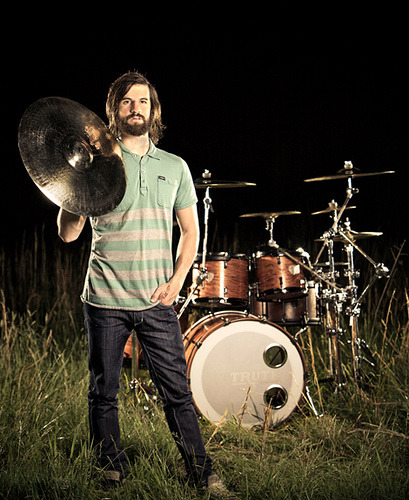
Sam is a drummer who plays rock and metal music and wants a location photo-shoot, he wants a peaceful and calm type of photo with his whole drum kit in the picture. He specifically wants the photo to be taken outside, in a field and if possible in the dark so all the focus is on him and the drum kit; he also wants to look very laid back just with his drum kit; something very similar to the picture of the drummer Matt Greiner (left). Unfortunately it is a bit difficult to get a good picture in a field and the background be as dark as he wants as I don't have access to any portable lights to light everything up so I suggested a couple of ideas: I could either take a photo of him in a studio and use Photoshop to superimpose the grass on the picture, however this would not look very professional. My other idea is to go and take the photos in a field but just after a sunset so there is enough light so that everything wont look to dark but so there is also no direct sunlight to make the photo look almost dark enough for Sams idea. Sam had found the perfect field in Needham Market for the photo shoot so that was to be the chosen location for it.
On the day of the photo shoot we had to wait until late afternoon for the sun to almost set. Shortly before this we had to set all the drum kit up of course, to do so we had to carry it all up a big hill to the field one bit at a time. Unfortunately this took longer than expected and we missed the sunset, luckily however though some mist was starting to come in so I started taking photos as soon as I could so I didn't miss it, as well as the little light we had left. The mist actually created a really nice effect and although it wasn't the intended effect, I think it looks really good.

This was the photo Sam chose to be his favourite (above). I took it into Photoshop and I brought the greens out more so that it would give it a more 'nature' looking theme to it, I then added a vignette around the edges to give it a bit more darkened look and make it look more professional. I am really pleased with how this picture turned out and Sam is extremely pleased with it as well, I really like how it looks like a sort of clash between him and his drum kit and nature but how it somehow looks like it should belong there. I have learned so much about location photo shoots and I now know what i'm capable of.

Music Portraiture Research Into Clients - Ali

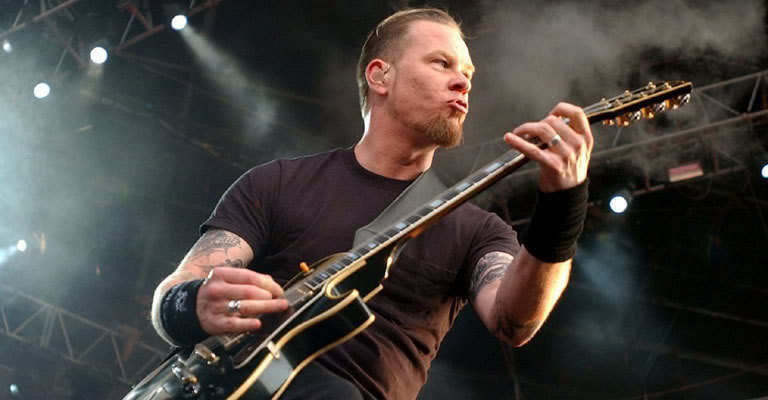
Ali is a guitarist who plays metal/industrial music. He wants studio based photo shoot and he wants a very 'so what' style of photo shoot. He wanted to look quite powerful and dark to relate with the style of the music he played. He wants a similar photo to the one of James Hetfield (left) where he is holding his guitar, looking quite powerful and dominating. Although he wanted it as a studio shoot instead of a live performance one. Some of my early ideas included having a low angle shot to try and make him look really dominating but I couldn't do this because the size of the backdrop didn't go high enough. I also had an idea of doing a shot down the guitar neck which was possible but I would have to crop the picture as some of the set would get in the shot.

During the photo shoot I decided to position the lighting to go with his idea for a powerful look, I exaggerated the shadows around his body a bit to fit with the dark feel of his genre of music. I took lots of shots of different angles, including the one looking down the guitar neck (right) and some looking down on top of him, however Ali decided on a straight shot of him and the guitar instead of any different angles as the final one (below).

After the photo-shoot I put the picture on Photoshop and edited various elements of it, using the 'curves' tool which, editing how I did, caused his face and jacket to become more pronounced and I lowered the brightness and contrast a bit as the light on his face was too bright. Overall I am happy with how the pictures for Ali have tuned out and so is he, I think I have done quite well considering I am quite new to studio based photography and I have learned a lot from this.

Monday, 20 May 2013

Portrait Photography Research

Portrait Photography


Portrait photography or portraiture is photography of a person or group of people that displays the expression, personality, and mood of the subject. Like other types of portraiture, the focus of the photograph is usually the person's face, although the entire body and the background or context may be included.
File:Edward S. Curtis self portrait 1899.jpg
Edward S. Curtis self portrait 1899
Portrait photographs have been made since virtually the invention of the camera. The relatively low cost of the daguerreotype in the middle of the 19th century and the reduced sitting time for the subject, though still much longer than now, led to a general rise in the popularity of portrait photography over painted portraiture. The style of these early works reflected the technical challenges associated with long exposure times and the painterly aesthetic of the time. Subjects were generally seated against plain backgrounds and lit with the soft light of an overhead window and whatever else could be reflected with mirrors. Advances in photographic equipment and techniques developed, and gave photographers the ability to capture images with shorter exposure times and the making of portraits outside the studio.

When portrait photographs are composed and captured in a studio, the photographer has control over the lighting of the composition of the subject and can adjust direction and intensity of light. There are many ways to light a subject's face, but there are several common lighting plans which are easy enough to describe.

Three-point lighting

One of the most basic lighting plans is called three-point lighting. This plan uses three (and sometimes four) lights to fully model (bring out details and the three-dimensionality of) the subject's features. The three main lights used in this light plan are as follows:

Key light

Also called a main light, the key light is usually placed to one side of the subject's face, between 30 and 60 degrees off center and a bit higher than eye level. The key light is the brightest light in the lighting plan.

Fill light

Placed opposite the key light, the fill light fills in or softens the shadows on the opposite side of the face. The brightness of the fill light is usually between 1/3 and 1/4 that of the key light. This is expressed as a ratio as in 3:1 or 4:1. When the ratio is 3:1 this is sometimes called Kodak lighting since this was the ratio suggested by Kodak in the instructional booklets accompanying the company's early cameras.
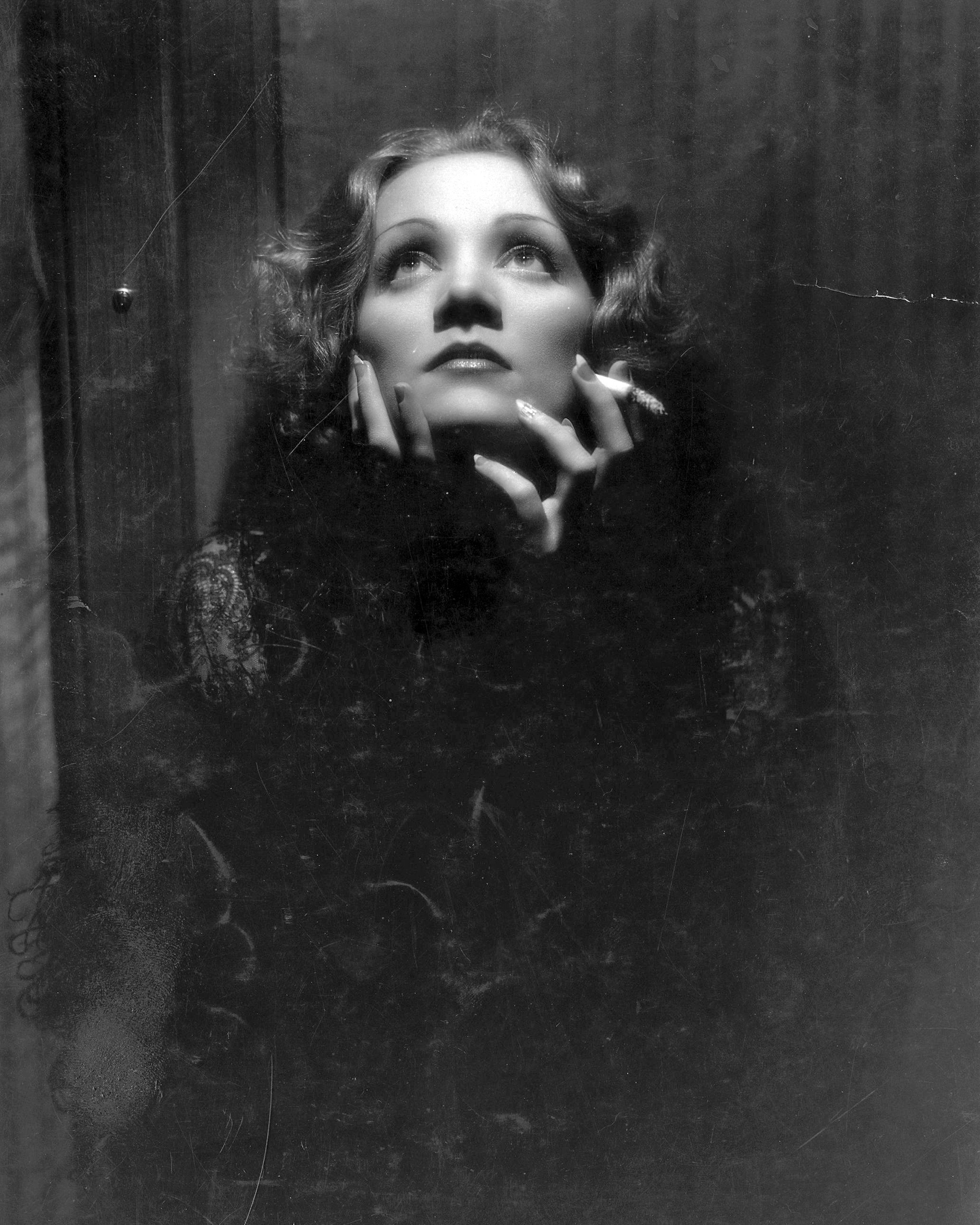
File:Marlene Dietrich in Shanghai Express (1932) by Don English.png
The effect lighting can have on a photo
The purpose of these two lights is to mimic the natural light created by placing a subject in a room near a window. The daylight falling on the subject through the window is the Key light and the Fill light is reflected light coming from the walls of the room. This type of lighting can be found in the works of hundreds of classical painters and early photographers and is often called Rembrandt lighting.

Back light

Also called a rim light or hair light, the back light (the third main light in the three-point lighting plan) is placed behind the subject, out of the picture frame, and often rather higher than the Key light or Fill. The point of the rim light is to provide separation from the background by highlighting the subject's shoulders and hair. The rim light should be just bright enough to provide separation from the background, but not as bright as the key light.
Sometimes the rim light is set just off to the side, on the fill light side. This can add edge detail to the shadowed side of your model's face. This can add the effect of having a kicker light using only the three basis lights of three point lighting.

Music Portraiture Research (Nick Pickles)

Photography Research


Nick Pickles is a London-based freelance photographer who travels across the country to cover gigs, festivals and events for a wide range of clients.

He currently works as the house music photographer at Wembley Arena, and in the past year has been comissioned by clients including Red Bull, the BBC, EMI, Disney, The Fly and many more.


He also won the 2011 Rock Archive Glastonbury photo competition. His previous roles have included being the house photographer at the 02 Academy Leeds for two years. He contributes to several major agencies including Getty Images, WireImage, Retna and WENN. His work has been used in a host of national and international publications, by bands for artwork and marketing materials and for private exhibitions.


While he does specialise in live music photography, he has also done a range of corporate work, portraiture, reportage and commercial photography for numerous clients. Some examples of this work can be found on the site in the other projects section.

Music Portraiture Research (Ami Barwell)

Music Photography


Ami Barwell has been shooting within the music industry for the past 13 years. Striking and atmospheric, honest & sexy; her photographs seek out and capture their subjects’ soul. Her photography encapsulates the true spirit of rock ‘n’ roll – passion, emotion, sex, sweat and soul.

Her amazing raw talent and gritty rock ‘n’ roll style has recently seen Ami in demand on fashion, commercial, advertising and style campaigns; working with Ben Sherman, Wella Shockwaves, Buddhist Punk and British Hairdresser of the Year.

Ami is one of main photographers that I want to have a style similar to. I like her photos as she manages to get a real performance look even though it's all done in a studio. This is a really nice style as it manages to capture everything that the artist loves.

Thursday, 20 December 2012

Music Portraiture Evaluation

Evaluation


I think overall my photo shoots went really well. I managed to get some really good pictures and the music students are really happy with them, that alone makes me happy as well as I know that the pictures are good enough for them to use to publicise their music.

My studio pictures went quite well and my music student Ali was pleased with them and said they were 'really good'. All the lighting was in the right place most of the time but there was sometimes a problem with it; it wouldn't flash in sync with the camera for some reason, this seemed to happen to everyone but it wasn't too much of a problem in the end.

My location pictures were the best as they, in general came out the best in the end and lots of people have said they are 'amazing' including, of course the music student Sam. There was a little bit of a problem with the initial photo shoot as we had trouble with transport so it had to be called off. Luckily the next time we did it everything went smoothly although the drum kit was a little bit difficult to carry to and from the place we had to go to.

In general I really liked the outcome of everything, even though I didn't like the studio shots that much; they came out good anyway. I did however find out that I really like taking pictures on location and am better at doing it as well.

Friday, 30 November 2012

Book Cover Project - Cover Ideas

Book Covers
 
 
This (right) was my first idea for a book cover. I took a picture of some kind of metal shed in an alleyway near the college which had rusted away and a few writings and drawings had been scratched into it. It's good because it could be anywere but it makes you think it's in the city and because even though no one is in the picture there is still evidence of people being there before.
This (left) was my second idea for the Invisible Man book cover. I took a picture of a part of Ipswich's skyline from the roof of a car park in town. It's good because it's in black and white so it looks similar already to pictures from the time it's set in. It's also a bit wet and miserable so links to the type of book it is.

Friday, 12 October 2012

ED2 Photo Assignment 1 Evaluation


Evaluation


I don’t think my self-portraits went that well, to begin with I wasn’t sure how to use the large format camera, then when it came to developing I managed to get a completely blank negative which wasted a lot of time. I then decided to take some pictures using photographic paper instead and the paper got stuck inside the camera, I tried it again and went straight into the darkroom to develop it and it seemed to come out ok but because of the amount of time spent doing all of this I had no time to develop it into a black and white picture. I then tried doing a photogram but didn’t really like it in the end.

I do however like the negative of my self-portrait where I’m still wearing my apron as it shows how I like to be practical and ready for things.

Next time I will either use a medium format or a 35mm camera instead of a large format camera or I will gain better knowledge of how to use it. I will also gain better knowledge of how to develop photos.

Friday, 5 October 2012

ED2 Photo Assignment 1-2

Brendon Burton

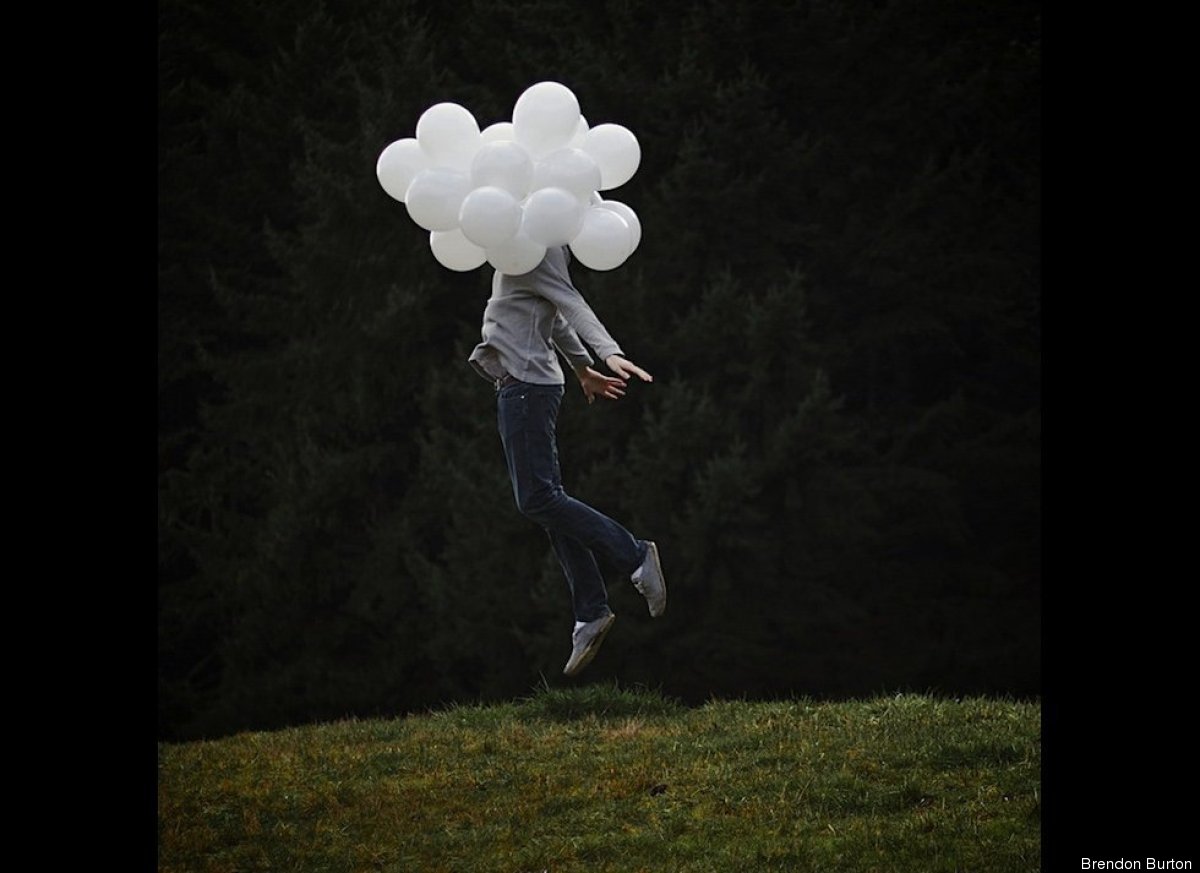
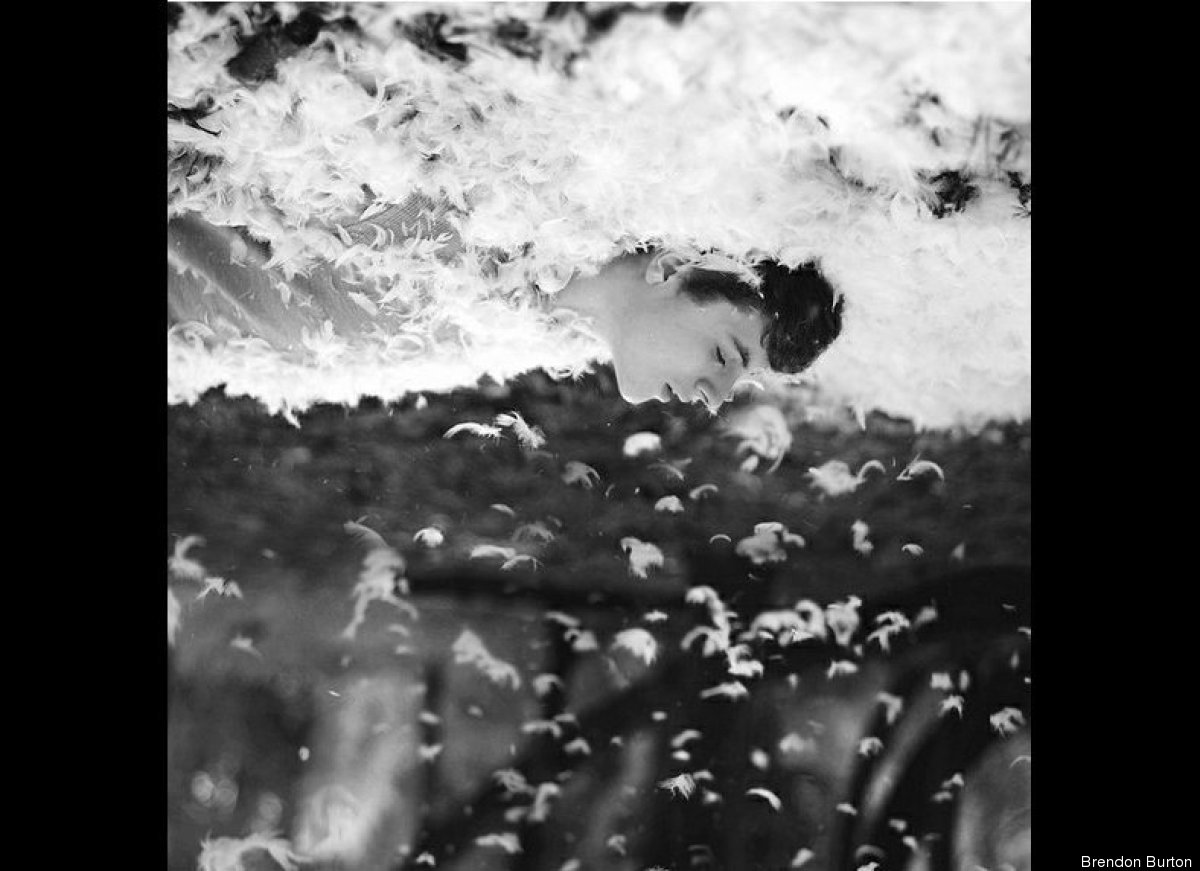
For one year, 18-year-old photographer Brendon Burton from Myrtle Creek, Oregon is challenging himself to create one self-portrait every day as part of his ambitious "365 Project." The teen's hauntingly beautiful and strikingly original photographs, which he posts on his Flickr page, are already attracting the attention of the art world.

Many of Burton's portraits depict him in an eerie natural landscape -- levitating off the ground with balloons covering his face, or sitting on a forest floor surrounded by floating pieces of paper -- while some of his recent work has become increasingly conceptual.

"I am inspired by so many incredible photographers," Burton wrote in an email to the Huffington Post. "Alex Stoddard, one of the first photographers I found doing the 365, really influenced me to try the project. I get my ideas from music, books -- just everyday life. I like to tell stories and project emotion with my work, most of which are deeply personal subjects for me."
For now, Burton has set his sights on finishing his 365 project, but in the long term, he hopes to turn his passion for art into a career.

"I hope to work for a publication, like Vogue or National Geographic," he said. "I've put a lot of time and effort into my work, and I certainly hope that I can keep doing this for a living. I love photography."
http://www.simondavidson.com.au/#/images/burnouts/1/thumbs

ED2 Photo Assignment 1-1

Vivian Maier
 
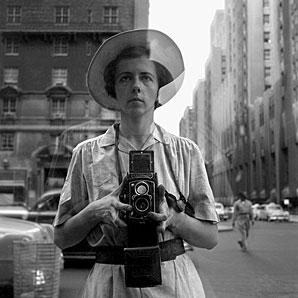
Vivian Maier, Self PortraitVivian Maier was an American street photographer born in New York City. Although born in the U.S., it was in France that Maier spent most of her youth. Maier returned to the U.S. in 1951 where she took up work as a nanny and care-giver for the rest of her life. In her leisure however, Maier had begun to venture into the art of photography. Consistently taking photos over the course of five decades, she would ultimately leave over 100,000 negatives, most of them shot in Chicago and New York City. Vivian would further indulge in her passionate devotion to documenting the world around her through homemade films, recordings and collections, assembling one of the most fascinating windows into American life in the second half of the twentieth century.
 
Vivian's Kodak Brownie

Early Years

Maier was born to a French mother and Austrian father in the Bronx borough of New York City. The census records although useful, give us an incomplete picture. We find Vivian at the age of four living in NYC with only her mother along with Jeanne Bertrand, an award winning portrait photographer, her father was already out of the picture. Later records show Vivian returning to the U.S. from France in 1939 with her mother, Marie Maier. Again in 1951 we have records of her subsequent return home from France, this time however, without her mother.

Sunday, 16 September 2012

Task 2 Staycation


 Gippeswyk Park


Outside my window (day)


Outside my window (evening)